

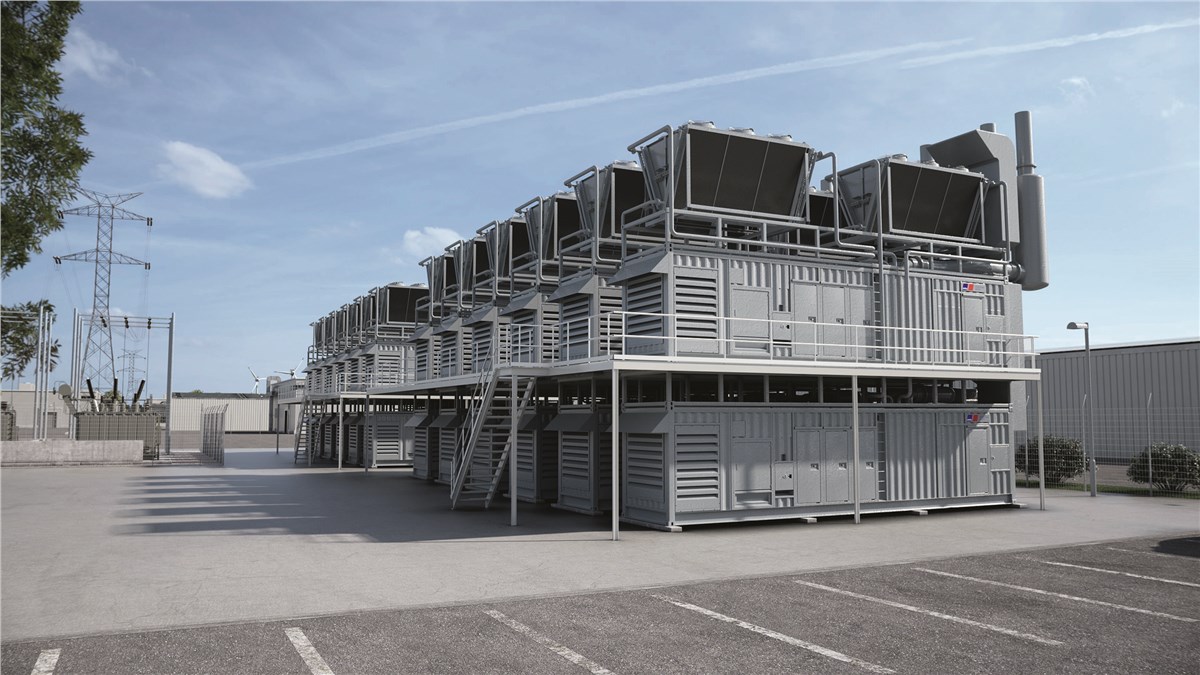
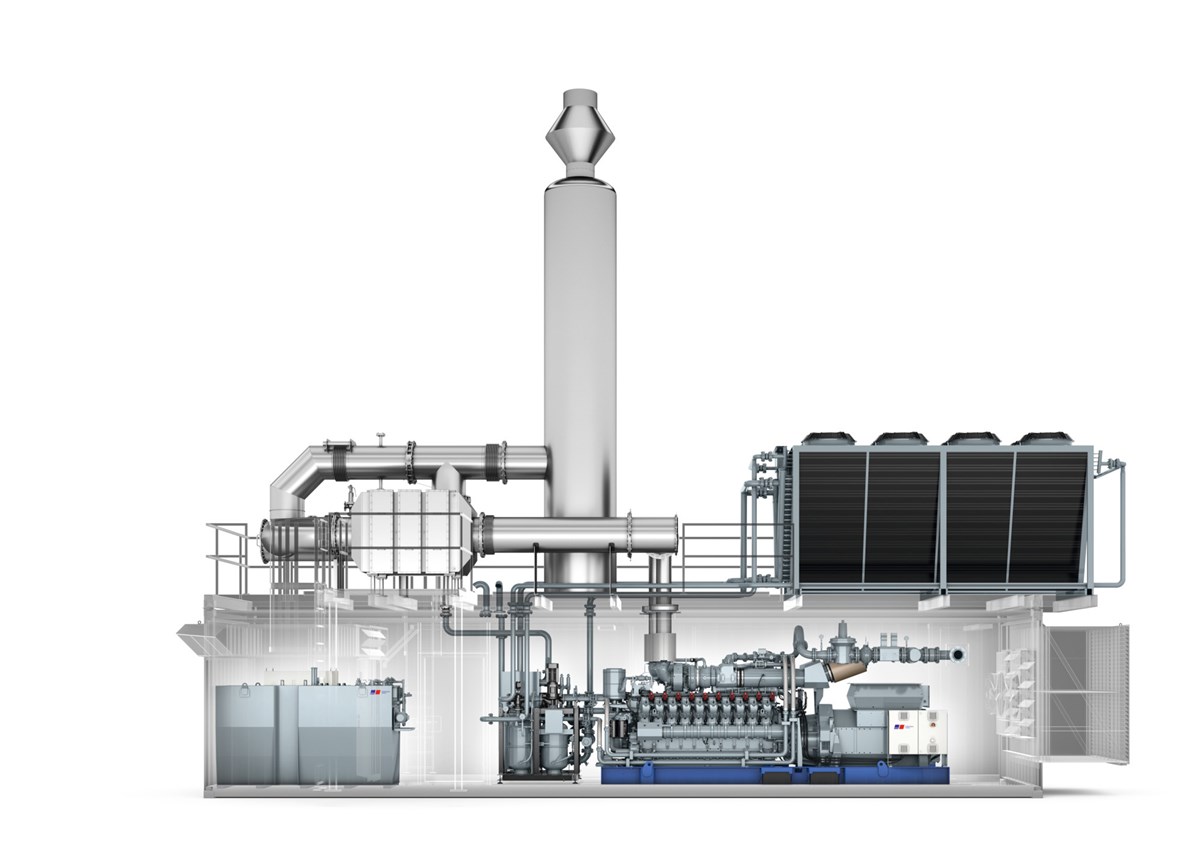
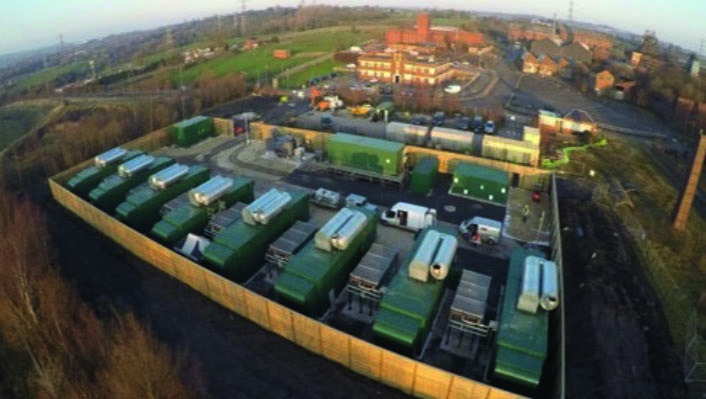
Rolls-Royce is launching a new modular solution for gas engine power plants that will provide security of supply and accelerate the implementation of the German Government’s Power Plant Strategy. The turnkey plants deliver between five and several hundred megawatts of power, depending on requirements and are H2-ready solutions suitable for the future use of hydrogen. Thanks to preconfigured, factory-tested modules with 10, 20 and 30 megawatts each, the power plants can be connected to the grid within 12 to 18 months of ordering.
The power generation plants are available as backup and compensate for fluctuations in the feed-in from wind and solar energy. This is particularly important during periods of low wind and low sunlight, when gaps of between 10 hours and several weeks need to be bridged. In some applications, they can also act as a bridging solution – providing continuous power until a connection can be made to the grid, or another power source such as nuclear, at which point the gensets can switch to providing backup power. Rolls-Royce will be presenting its new solutions at the E-world energy trade fair in Essen from February 10 to 12, 2026, at booth 6H106 in Hall 6.
Tobias Ostermaier, President Stationary Power Solutions at Rolls-Royce Power Systems explained:
With our modular gas engine power plants, we are implementing the German Government’s Power Plant Strategy quickly and economically. Our partner network ensures speed and local value creation. Utilities and data centers around the world rely on our solutions – more than 17 gigawatts of installed capacity speak for themselves.”
Modular gas engine power plants combine resilience, cost-effectiveness, and sustainability
Decentralized gas engine power plants increase grid resilience and support the further integration of renewable energies into the grid. Instead of a few large, centralized units, they rely on many smaller units that can be switched on or off individually as needed and always operated at optimum efficiency – a plus for economic efficiency and climate protection, especially when using biomethane and biogas.
Michael Stipa, Senior Vice President Strategy, Business and Product Development Stationary Energy Solutions at Rolls-Royce Power Systems said:
True resilience comes from decentralization, not centralization. An energy system based on many distributed, modular generation units is less susceptible to large-scale disruptions and bottlenecks. Modular gas engine power plants offer exactly this structure.”