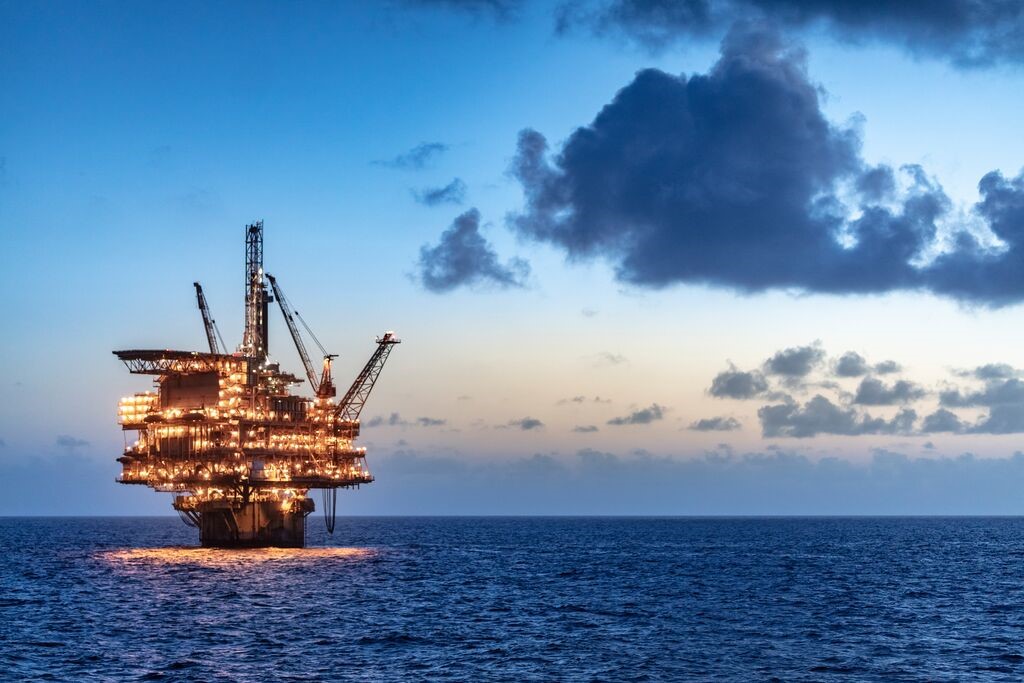
Shell Trinidad and Tobago (through BG International, a subsidiary of Royal Dutch Shell plc) today announces that production has started on Block 5C in the East Coast Marine Area (ECMA) in Trinidad and Tobago. This marks a significant milestone in the delivery of gas both domestically and internationally through Atlantic LNG.
“Today’s announcement strengthens the resilience and competitiveness of Shell’s position in Trinidad and Tobago,” said Maarten Wetselaar, Director of Integrated Gas, Renewable and Energy Solutions. “This is a key growth opportunity that supports our long-term strategy in the country as well as our global LNG growth ambitions.”
Block 5C, known as Project Barracuda, is a backfill project with approximately 25,000 barrels of oil equivalent per day (boe/d) (140 mmscf/d) of sustained near-term gas production with peak production expected to be approximately 40,000 boe/d (220 mmscf/d). It is Shell’s first greenfield project in the country and one of its largest in Trinidad and Tobago since the BG Group acquisition.

by Filter Technology (Coalescer Filter, Cartridge Filter, Mechanical), Filter Media (Activated Carbon, Metallic, Synthetic Polymer), Application (Gas Processing Plant, Compression Stations, Storage & Distribution), Filtration Phase, and Region
Download free sample pages“We are immensely proud of our people and the remarkable work it took to achieve this milestone, particularly given that drilling began in May 2020 during the COVID-19 pandemic,” said Eugene Okpere, Shell’s Senior VP and Country Chair. “Our execution strategy had to be completely overhauled to deliver our business plan, all while working remotely. It required tremendous resilience, adaptability and commitment.”
The ECMA is one of the most prolific gas-producing areas in Trinidad and Tobago. As part of Shell’s development strategy, the company has sought ways to access the significant volumes that exist in the ECMA and to bring them online.

Houston, TX
May 13 - 15, 2026