

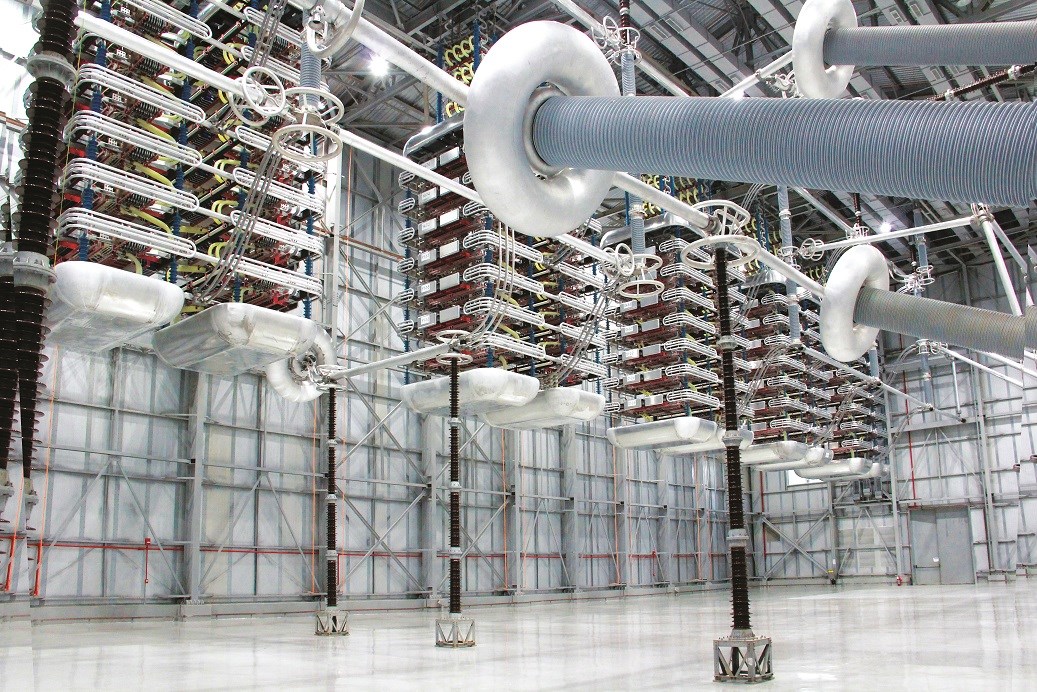
GE Vernova Inc. (NYSE: GEV) announced that its Electrification Systems business has been awarded a contract by Power Grid Corporation of India Limited (POWERGRID), India’s national transmission utility, to refurbish the Chandrapur back-to-back High Voltage Direct Current (HVDC) link—a key 1,000 MW interconnection between the country’s western and southern grid systems. This marks GE Vernova’s first HVDC refurbishment contract in India.
Modernizing a vital interconnection between West and South India
The 1,000 MW back-to-back HVDC link plays a pivotal role in balancing regional power flows between India’s western and southern regions. Originally commissioned in the late 1990s, the link enables bi-directional energy transfer between fossil-rich and hydro-rich zones—improving dispatch efficiency and conserving regional energy reserves.
Under the new contract, GE Vernova will upgrade both 500 MW converter stations at each end - Chandrapur (Western region) to Ramagundam (Southern region) - modernizing the HVDC control and protection systems and replacing the legacy converter valves with advanced technology manufactured at GE Vernova’s facilities in India.
“This landmark contract reinforces our long-standing relationship with POWERGRID and our commitment to India’s grid modernization,” said Johan Bindele, Leader of GE Vernova’s Grid Systems Integration business and teams. “Refurbishing this HVDC link with next-generation controls and digital capabilities will not only enhance its reliability but also strengthen India’s efforts toward a secure and sustainable power system.”
Extending grid life, improving stability
Refurbishment of HVDC systems involves upgrading essential components such as converter valves, automation systems, and grid protection infrastructure, all while ensuring minimal operational disruption. The modernization is expected to extend the asset’s lifespan, enhance energy efficiency, and improve grid flexibility to handle growing renewable penetration.
Investments in refurbishment offer utilities a cost-effective way to strengthen infrastructure resilience—preserving prior capital investments while aligning with today’s energy transition needs.
Supporting India’s energy goals
India’s ambitious goal to reach 500 GW of non-fossil capacity by 2030 relies on robust, flexible transmission infrastructure. HVDC systems are essential to move large volumes of renewable power efficiently across long distances.
Refurbishing this strategic inter-regional corridor will help unlock that potential—enabling cleaner energy flows, improving system reliability, and contributing to India's long-term energy security.