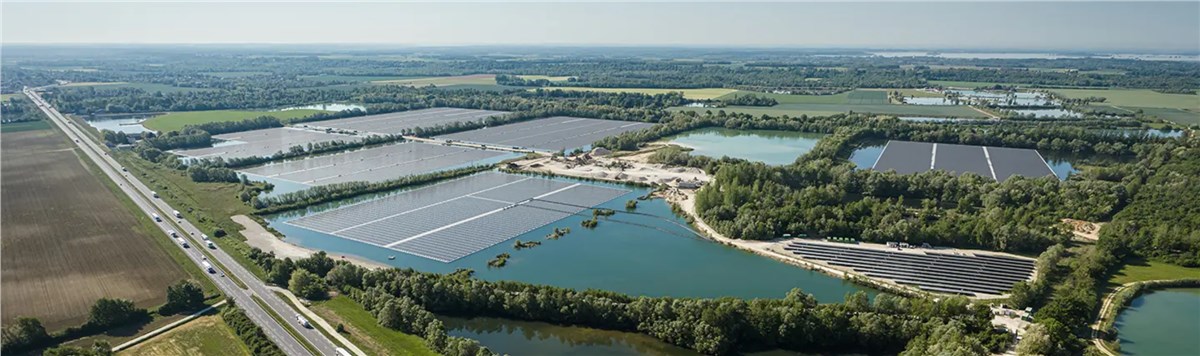
As energy demand continues to rise, the pressure to deliver dependable power within tight land and permitting constraints is prompting a rethink of where and how new energy capacity can be built. Land suitable for large energy projects is often limited, yet across industrial regions, there are sites that once powered industry and now sit quiet: water-filled gravel pits, disused quarries, and first-generation wind farms nearing the end of their economic lifespans.
These locations can offer opportunities for new capacity. Floating solar arrays are turning industrial ponds into productive generation hubs, while modern turbines are breathing life into high yield wind sites first developed two decades ago. The shift reflects a wider recognition that strengthening energy resilience may depend not just on new builds, but on smarter use of assets already in place.
One company providing an example of how this can be done is Hanwha Q ENERGY, a holistic energy solutions provider delivering renewable power projects across Europe. With recent projects spanning from Europe’s largest floating solar installation to France’s leading repowering pipeline, Q ENERGY is demonstrating how land modernization and repowering can deliver meaningful capacity gains — without expanding physical footprints.

by Type (Recoverable, Expandable), Class (Short Range (<25 km), Mid Range (25-100 km), Long Range (>100 km)), Air Time (Short Endurance (<45 min), Medium Endurance (45-120 min), Long Endurance (>120 min)), Warhead Type, Navsensor, Launch Mode, End User, and Region
Download free sample pages